We received a 1-week old Cape Grysbok whose mother had been killed by some farm workers. Fortunately, the little thing was fairly strong and had had the 1st week of it’s mothers milk. We immediately started to google and search for information on the Cape Grysbok.

What struck me was the lack of available information. Lots on hunting, but very little on saving. We relied on our own recipes for caring for and saving little souls. We use a standard milk formula which we make up using the yolk of an egg, full cream milk and a heaped spoon of full cream yoghurt. We have found this works well with lambs, alpaca and llama crias and even springbok young.
The first 2-days is the telling time. It is also the time it can take to get the little one to learn how to take the teat. This requires opening the mouth and inserting the teat. It was on day 3 that she started to drink.
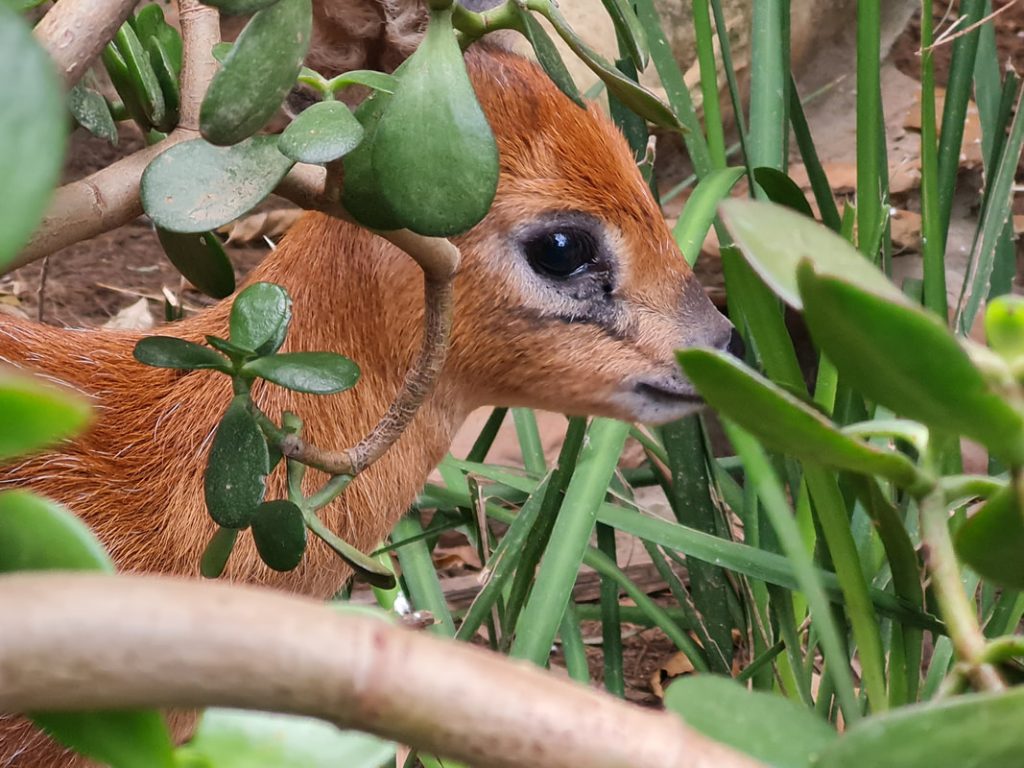

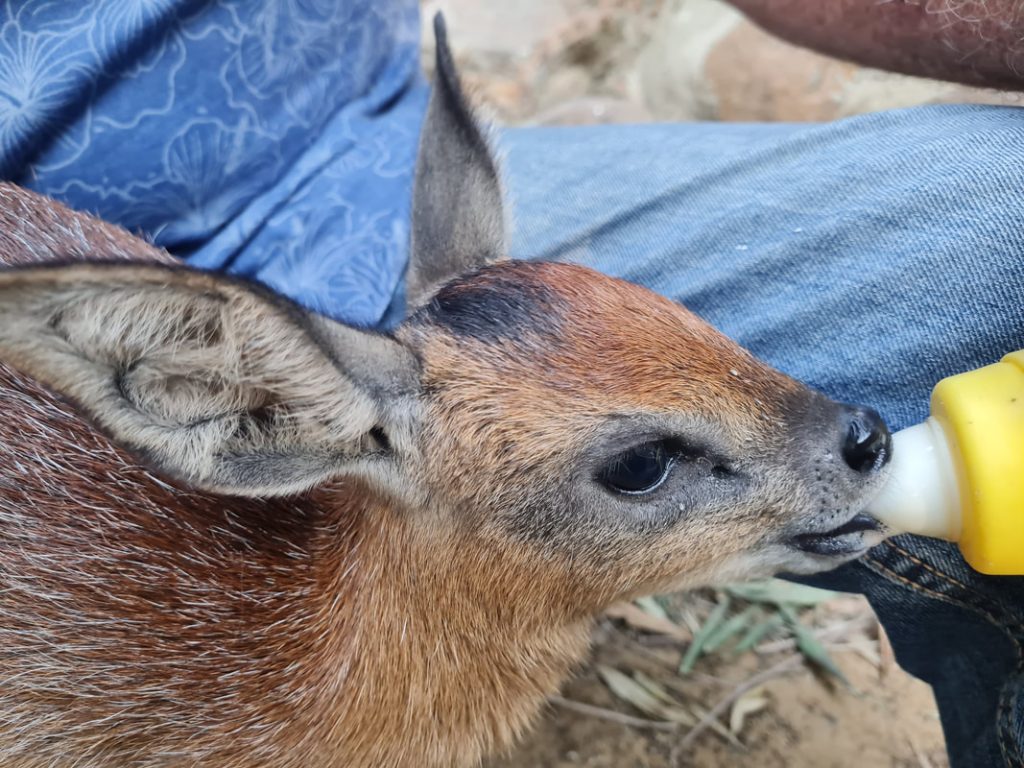
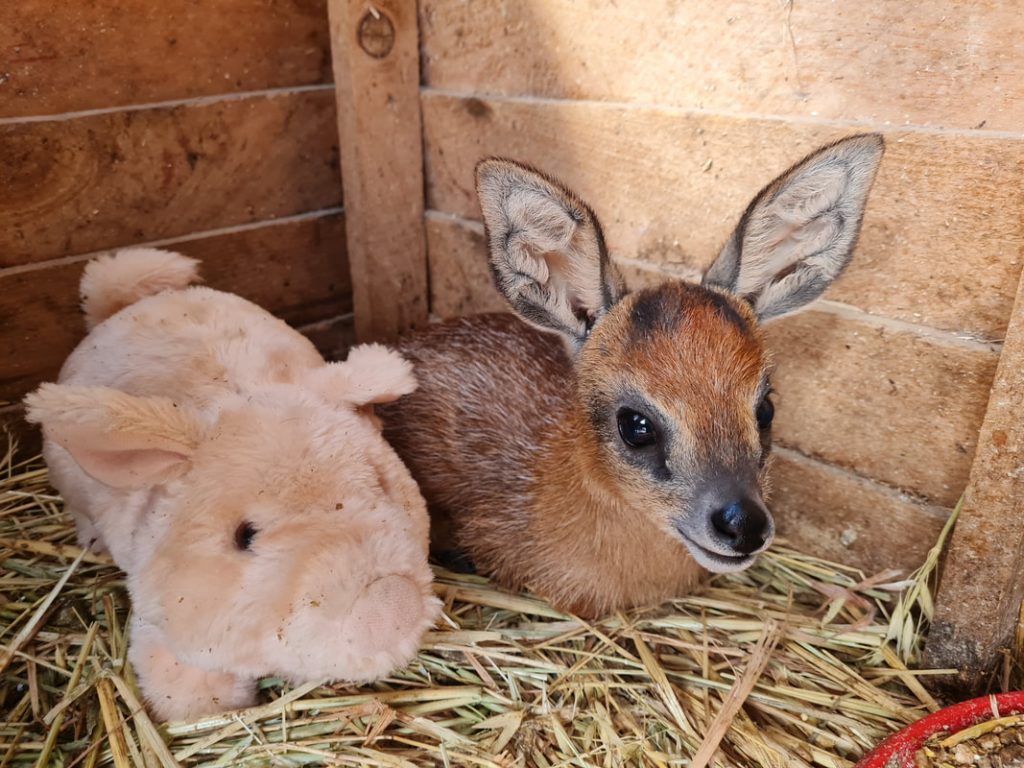
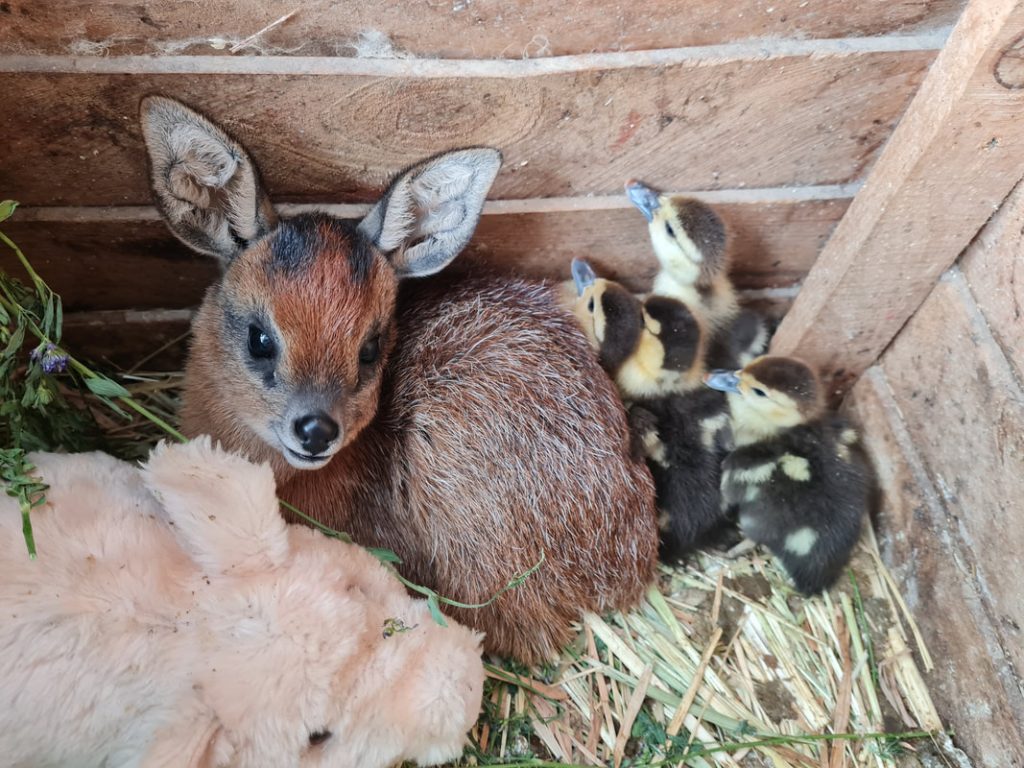
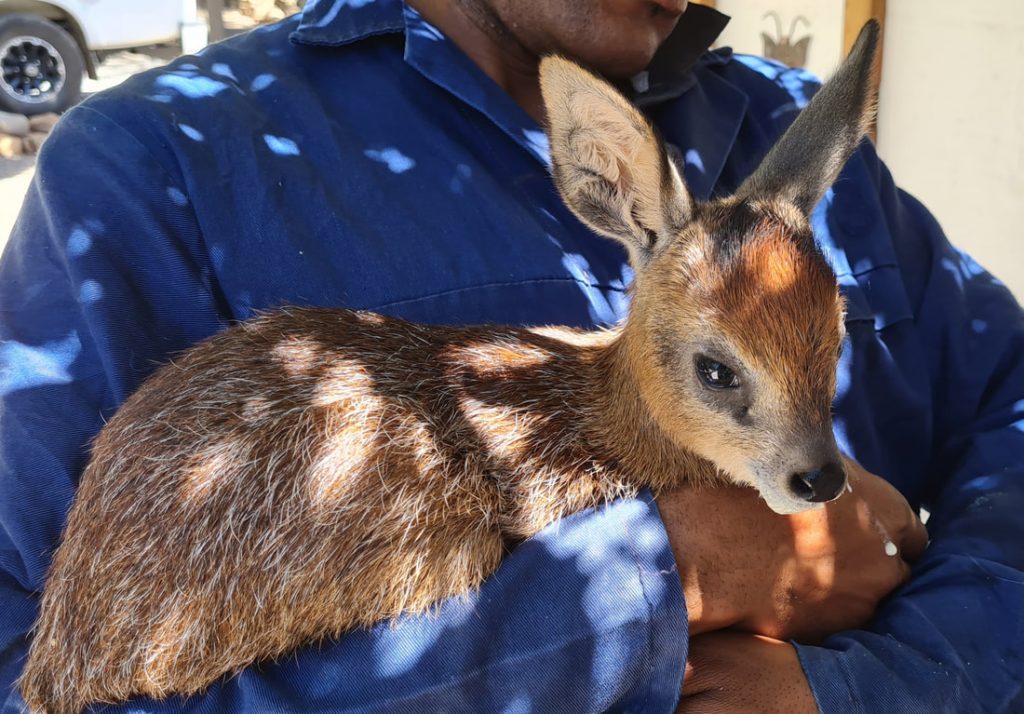
Some tips: she was quite stressed from the loss of her mother, so we put her with some young bunnies and ducklings. She is fact cuddled up with them. We kept her in a dark large hutch, to keep her contained and give her a sense of safety. When they are this young they also need to be stimulated to urinate. We were lucky as our Great Danes took to her, and licked her all over. The alternative is damp cotton wool.
In the early days we needed to hold her while she drank, and then on the ground with no way to run. She then learnt to stay and drink. We also learnt that whenever she needed to drink she would first go through the motions of nuzzling and then ‘punching’ with her mouth. Her way of stimulating the milk flow in her mother. Once she had done this she would then take the teat and drink happily.
She started a midden from the start. While she was on milk, she would only ever urinate. She slowly started to nibble solids – fresh lucerne – which we would tie in bundles so she got used to tugging at the food. She was less interested in lucerne on the floor, and even found it hard to pull pieces off. As soon as she started to eat solids, she started to pass pellets using the same midden. They love dark places where they can conceal themselves, at times so well, it took us ages to find her. She would drink when she was ready. Waking up and then stretching.
They are happy to have their heads touched and their ears, but dislike their backs being touched.
She is healthy and very settled.
Some Characteristics for the Cape Grysbok: The fur is the most tell-tale sign. It is speckled with grey. Even from 1 week old. They have interesting patterns in their ears. Cloven hooves on the thinnest legs I have ever seen on any animal. Black nose and black tongue. Secretive. They need areas where they can hide and they can disappear from sight.
We were blessed with this privilege and if you ever are in the position of taking care of one, it will be a memorable experience.
AUTHOR
Maurice Lancaster is a leadership specialist and author and with a background in the human sciences. Maurice lives in the Western Cape in the Witzenberg Valley where he runs an animal sanctuary. Maurice has a deep-seated passion for fauna and flora. From self-learning, peer learning and more formal hands-on upskilling, Maurice has committed to the wellbeing of animals
Comment Test: ECB